
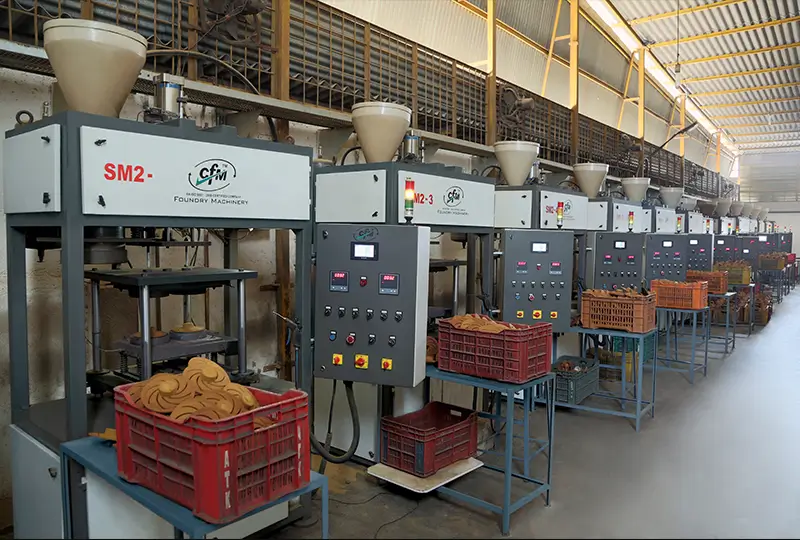
Shell core shooter machines play a vital role in the manufacturing world, especially in foundries. They are used to create sand molds, which are essential for casting metal parts. These machines work by shooting a mixture of sand and a resin binder into a mold, which is then heated to form a strong, hollow shell.
The process is both efficient and precise, making it popular in industries that require detailed and complex metal parts. The key advantage of using a shell core shooter is that it saves time and reduces labor costs while ensuring high-quality results.
For anyone curious about how these machines operate or considering using one in their production line, understanding the steps involved can provide valuable insight. The unique way these machines combine sand and resin is a fascinating aspect worth exploring.
All You Need to Know About Shell Core Shooter Machines
Shell core shooter machines are essential for creating hollow sand cores used in metal casting. They streamline the process by injecting sand mixed with resin into a core box, forming precise shapes.
Definition and Purpose
Shell core shooter machines are used to produce sand cores for casting. These machines make hollow shapes needed for complex metal parts. The core is usually sand mixed with a resin binder, which hardens to keep its shape.
The purpose is to create accurate cores quickly. This helps in mass production, cutting down the time and effort needed. Shell core shooters ensure that each core has consistent quality, reducing defects in the final metal product.
Components and Design
A shell core shooter machine has several main parts. These include:
Hopper: Holds sand and resin mixture.
Blowing Head: Forces the mixture into the core box.
Core Box: Mold where the sand core forms.
Heating System: Cures the resin to harden the core.
Design focuses on speed and accuracy. Machines are automated to streamline processes. Adjustments can be made to fit different core designs. Some have advanced controls for adjusting sand flow and heating. This versatility makes them suitable for many applications in metal casting.
Operating the Machine
Operating a shell core shooter machine involves several key steps: preparing sand, setting up the core box, shooting and curing the core, and extracting and finishing. Each step requires careful attention to detail for successful operation.
Preparing the Sand Mixture
The first step is to prepare the sand mixture. Fine sand and a binding agent are essential. The sand must be clean, dry, and have a consistent grain size.
A typical mixture might include:
95% silica sand
3-4% urea-formaldehyde resin
1-2% hardener
The mixture needs thorough blending to ensure uniform distribution of the resin and hardener. This affects the final quality of the cores.
Core Box Setup
Next, they set up the core box. A core box is a mold where the sand mixture is shaped. Alignment and cleanliness are vital.
The core box should be checked to ensure that no residues from past operations remain. This can affect core quality. Operators often apply a release agent to prevent sticking.
Accurate alignment of core halves avoids defects. Proper setup ensures that the cores have the desired size and shape.
Shooting and Curing Process
In this step, the prepared sand is blown into the core box with high pressure. This forms the core. Amounts of air pressure can vary, usually ranging from 4,000 to 6,000 psi.
After the sand is packed, curing begins. Heat is applied to the core box, usually between 250°F and 450°F. This process hardens the core, securing its strength and shape. The curing time is often around 30 seconds to 5 minutes, depending on requirements.
Finally, the core is removed from the core box. They must handle the core carefully to prevent breaking.
After extraction, some excess sand or flash may remain. They trim this off to get a smooth finish.
Inspecting the core for defects like cracks or voids is important. This ensures the core meets quality standards. If any issues are found, adjustments in the process may be needed to improve future operations.